Strategic Integration of Bonus Credits and Stake Modifications for Racket Sports Betting Markets
Sofia Braun · Sep 29, 2026

Strategic Integration of Bonus Credits and Stake Modifications for Racket Sports Betting Markets
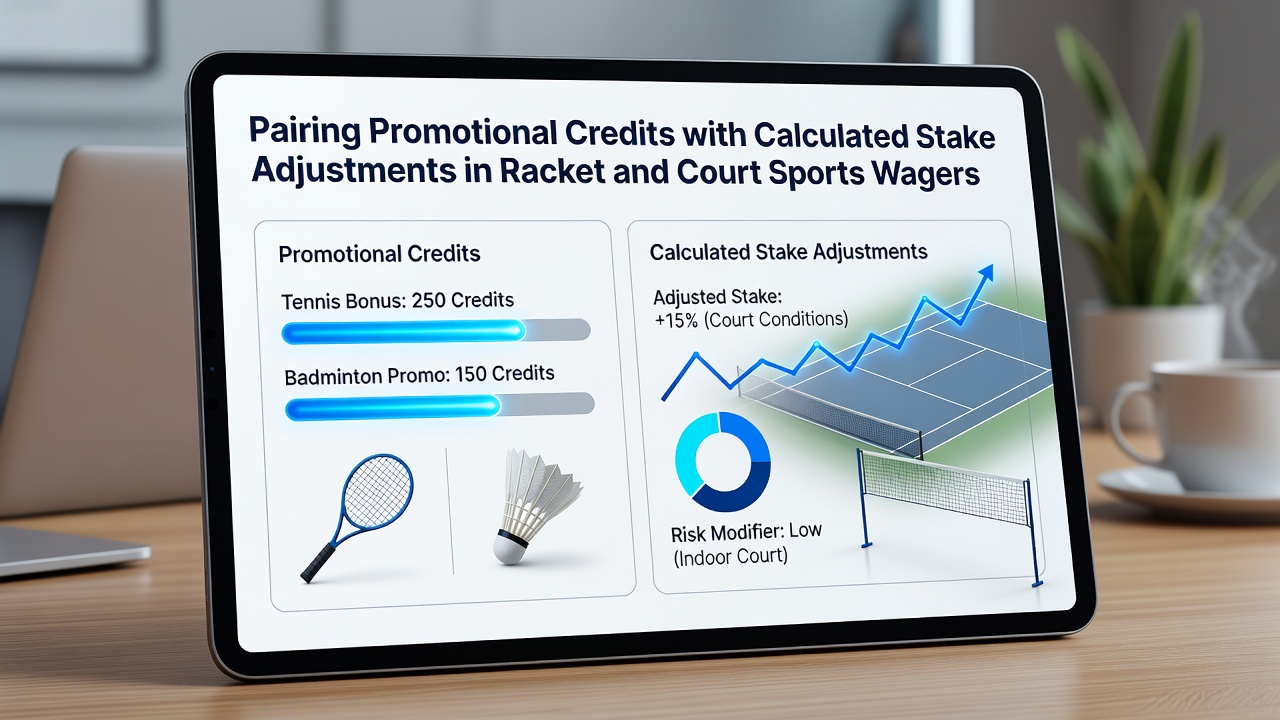
Promotional credits function as deposit matches or free bet tokens that operators issue to new and returning accounts, and these tools require precise stake recalibrations when applied to racket and court sports wagers such as tennis, badminton, squash, and basketball. Operators calculate credit values against standard stake limits, which forces bettors to adjust individual bet sizes so that the effective exposure remains consistent with bankroll targets across multiple legs or single-match propositions.
Mechanics of Credit Application in Racket Sports Markets
Bookmakers apply promotional credits either as stake credits that reduce the cash outlay required or as profit boosts that multiply returns on successful selections, and these mechanics interact directly with the decimal or American odds formats common in tennis and basketball lines. Bettors who receive a 50 percent deposit match must divide the credited amount across planned wagers while maintaining the same total exposure level that would have existed without the bonus, which preserves the original risk-to-reward ratio.
Calculated stake adjustments begin with identification of the credit's cash equivalent, followed by proportional reduction of each planned stake so the sum of cash and credit portions equals the intended total. In tennis match betting, where live odds shift rapidly during sets and games, this proportional reduction prevents overexposure when a bettor adds an in-play leg after the initial pre-match stake has already consumed part of the credit allocation.
Stake Recalibration Techniques Across Court Sports
Researchers at the Australian Gambling Research Centre documented how bettors in regulated markets apply percentage-based scaling when promotional credits appear alongside accumulator structures that combine tennis sets with basketball quarters. The study found that operators enforce maximum stake caps on credit-funded portions, which compels users to split larger intended wagers into cash and credit segments that respect those caps while preserving the overall liability figure.
One documented approach involves anchoring the credit portion to the lowest-odds leg within a multi-sport parlay, thereby minimizing the impact of any single-leg loss on the credited amount. In badminton and squash markets, where point spreads and total games lines carry narrower margins than football equivalents, this anchoring technique maintains the required edge after the credit has been applied and stakes have been reduced accordingly.
Data Patterns Observed Through September 2026
Figures released in September 2026 by the Nevada Gaming Control Board showed continued growth in handle on tennis and basketball propositions, with promotional credit redemptions accounting for an increasing share of total turnover in those categories. The same release noted that operators adjusted maximum credit stakes on live tennis markets more frequently than on pre-match basketball lines, reflecting the faster pace of odds movement during matches.
Industry reports from the European Gaming and Betting Association indicate that bettors who systematically recalculate stakes after each credit issuance achieve higher redemption rates than those who apply credits uniformly across all selections. The difference arises because uniform application often violates operator stake caps on individual legs, which triggers automatic rejection of the entire ticket and leaves the credit unutilized until the next deposit cycle.
Integration with Multi-Leg Accumulators
Accumulator structures that span racket and court sports require sequential stake adjustments as each leg's odds become available. Bettors first allocate the credit across the total number of legs, then reduce each cash component so the combined stake matches the original plan. This sequential method accounts for the fact that some legs close earlier than others, allowing the remaining credit balance to be reapplied without exceeding daily or weekly operator limits.
Live betting environments add another layer because odds updates occur between points in tennis or between possessions in basketball, and any stake adjustment must be completed before the next market suspension. Those who maintain pre-calculated adjustment tables for common credit percentages report fewer missed opportunities when markets move quickly.
Conclusion
Pairing promotional credits with calculated stake adjustments in racket and court sports wagers follows established proportional scaling methods that respect operator caps and preserve intended exposure levels. Data from multiple regulatory and industry sources confirm that systematic application of these methods correlates with higher credit utilization rates across tennis, badminton, squash, and basketball markets as of September 2026.